Mass Timber Construction
Strength, Sustainability, and Human-Centered DesignMass timber is gaining momentum across the U.S. as builders, designers, and developers look for ways to reduce environmental impact while also creating better places for people to live and work. That conversation is increasingly relevant in Florida, where rapid growth, climate considerations, and evolving building codes are shaping how projects are planned and delivered. While sustainability often leads the conversation, another driver is just as important: how buildings feel once they’re occupied.
Mass timber sits at the intersection of performance and biophilic design—a growing approach to architecture that emphasizes humans’ innate connection to nature. It’s not a trend driven by aesthetics alone, but a broader shift in how buildings are conceived, experienced, and valued over time.
At Gervais Ventures, we see mass timber as part of that larger shift. It’s a system worth understanding, testing, and refining as more teams explore how natural materials can support both building performance and occupant well-being.
What Is Mass Timber?
Mass timber refers to a family of engineered wood products used as primary structural elements, including cross-laminated timber (CLT) panels, nail laminated timber (NLT), dowel laminated timber (DLT), glue-laminated (glulam) beams, structural composite lumber (SCL), and large structural sawn timber members. These products are manufactured by layering wood in different orientations, creating components that are strong, stable, and capable of supporting larger and taller buildings than traditional light wood framing.
From a sustainability standpoint, mass timber offers clear benefits. Wood is renewable and stores carbon for the life of the building, helping offset emissions associated with construction. But mass timber’s appeal goes beyond carbon metrics, it also allows the structure itself to become part of the interior experience, rather than something hidden behind finishes.
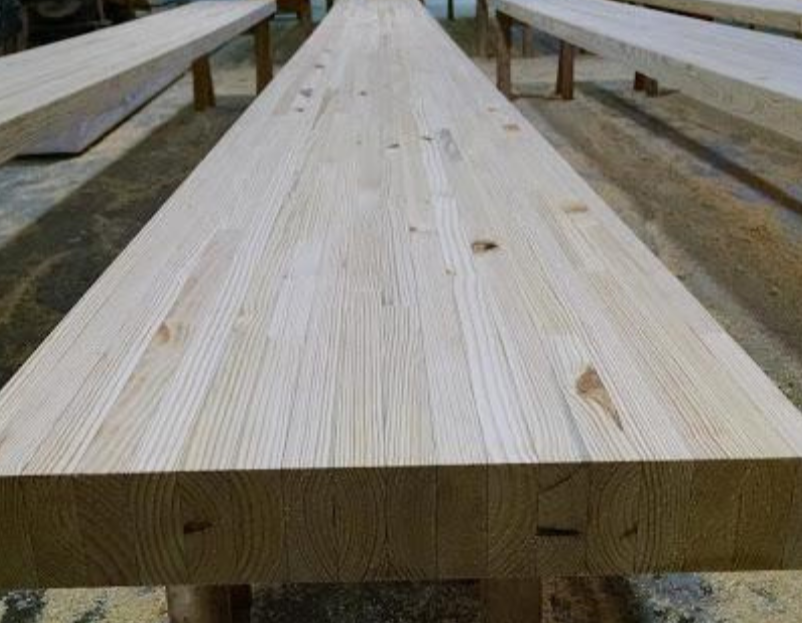
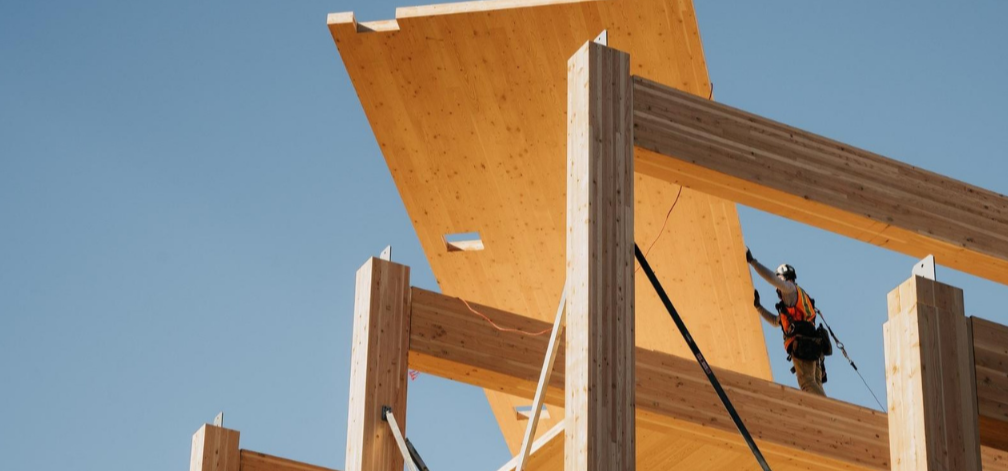
Mass Timber Panel and Decking Product Examples
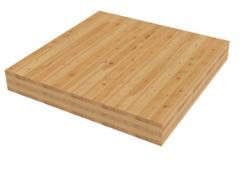
Cross Laminated Timber CLT (of sawn lumber)
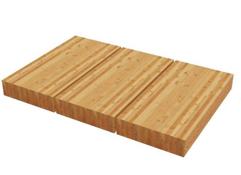
Glue-Laminated Timber GLT
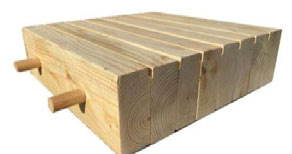
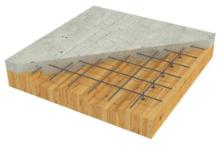
Timber Concrete Composite TCC
Why Builders Are Paying Attention
Mass timber continues to attract interest because it offers practical advantages while also supporting more human-centered design:
- Structural efficiency – High strength-to-weight ratios support efficient structural systems.
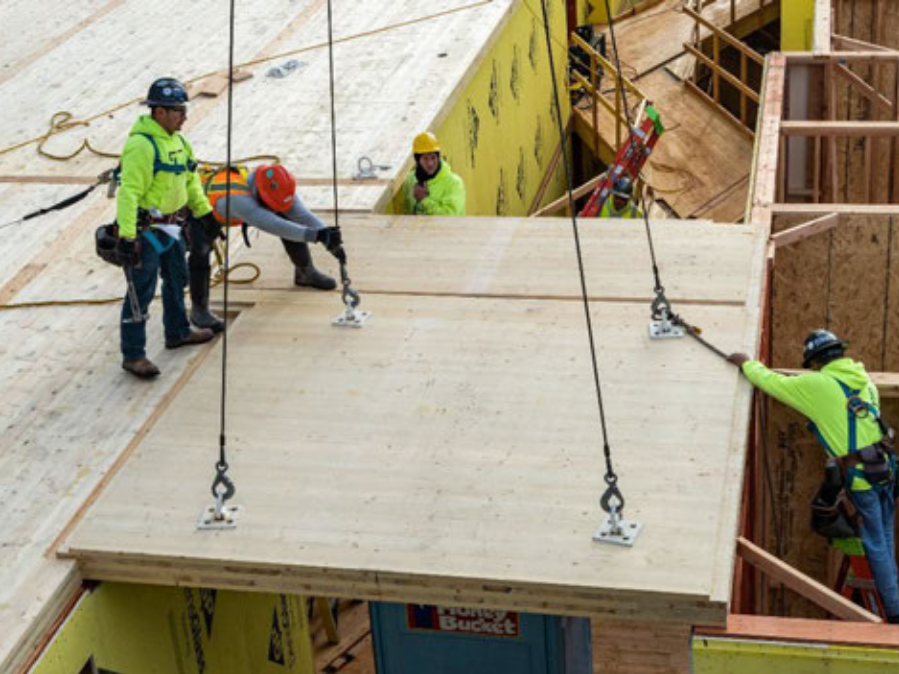
- Prefabrication – Off-site manufacturing improves precision and shortens construction timelines.
- Reduced foundation demands – Lighter structures can lessen foundation requirements in certain conditions.
- Thermal performance – Wood naturally moderates temperature and supports energy efficiency.
- Design flexibility – Exposed structural elements can reduce finish layers while enhancing interior character.
In markets like Florida, where construction schedules, weather exposure, and long-term durability are constant considerations, these efficiencies are often evaluated alongside resilience and lifecycle performance.
Mass Timber and Biophilic Design
Biophilic design is based on the idea that people are naturally drawn to environments that reflect nature through materials, light, texture, and spatial experience. In practice, this often includes natural daylight, views, plants, and the use of materials like wood that provide visual warmth and tactile comfort.
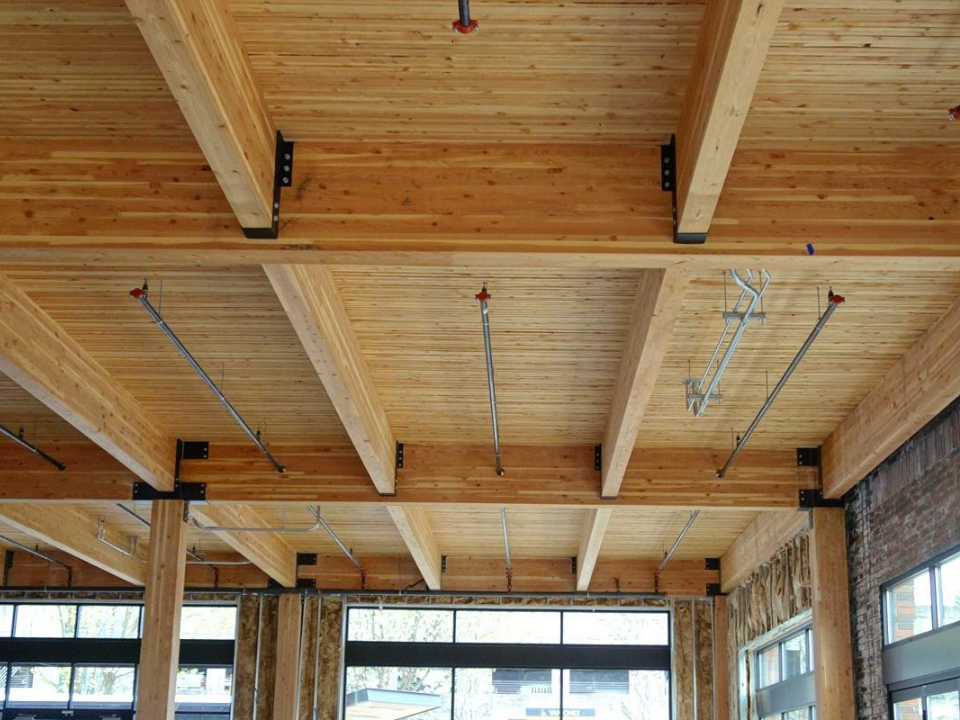
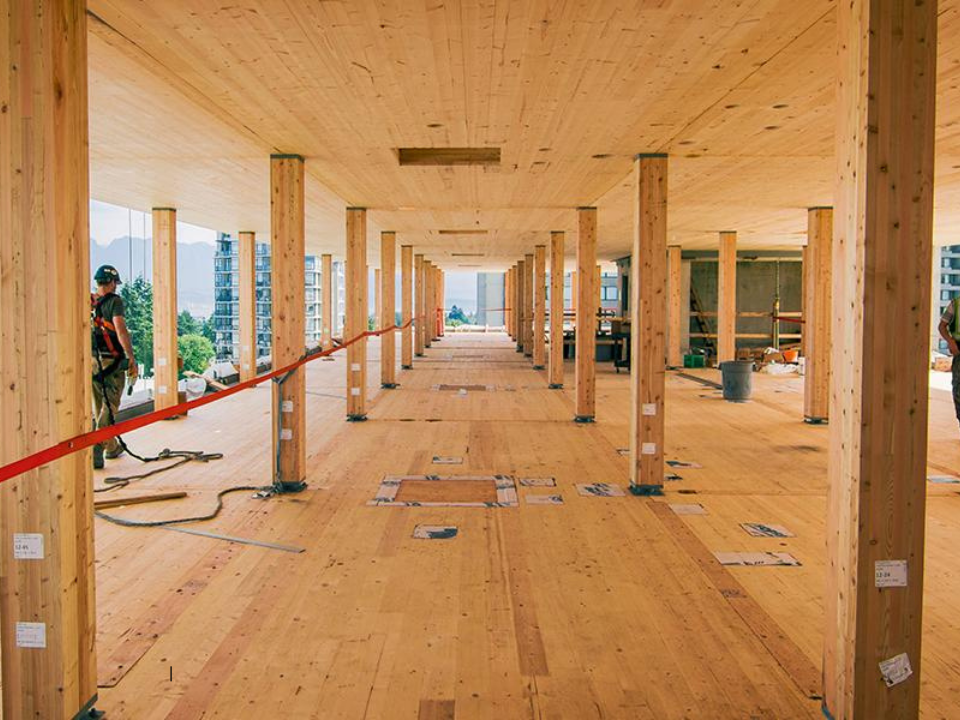
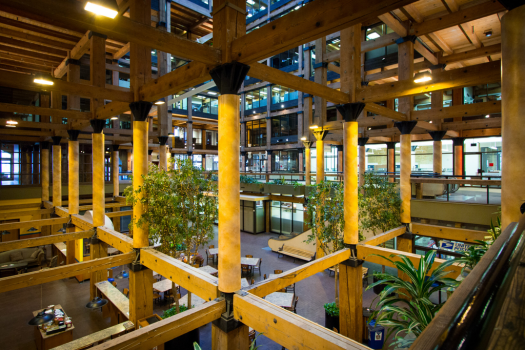
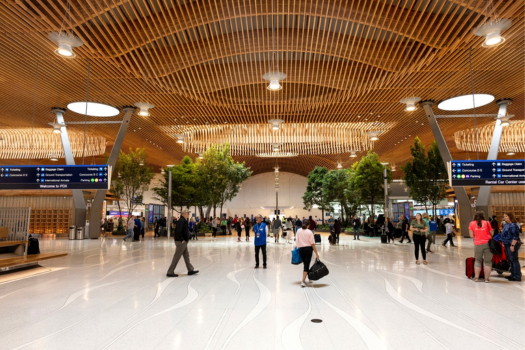
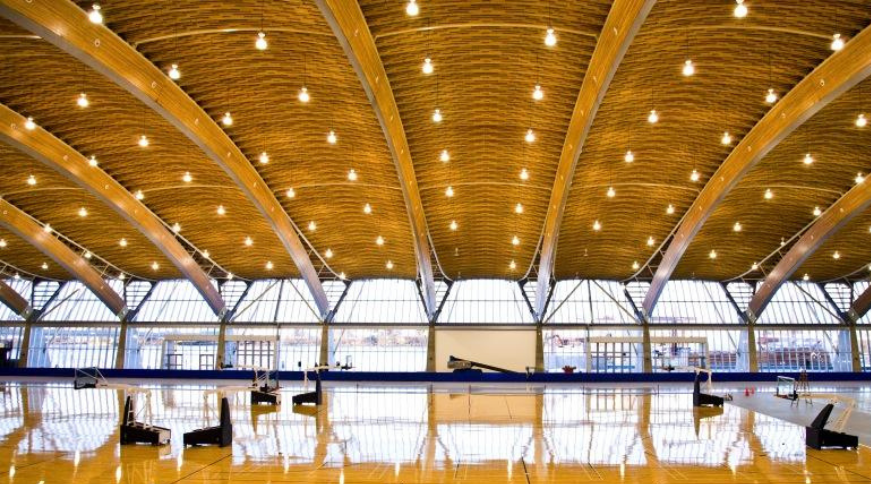
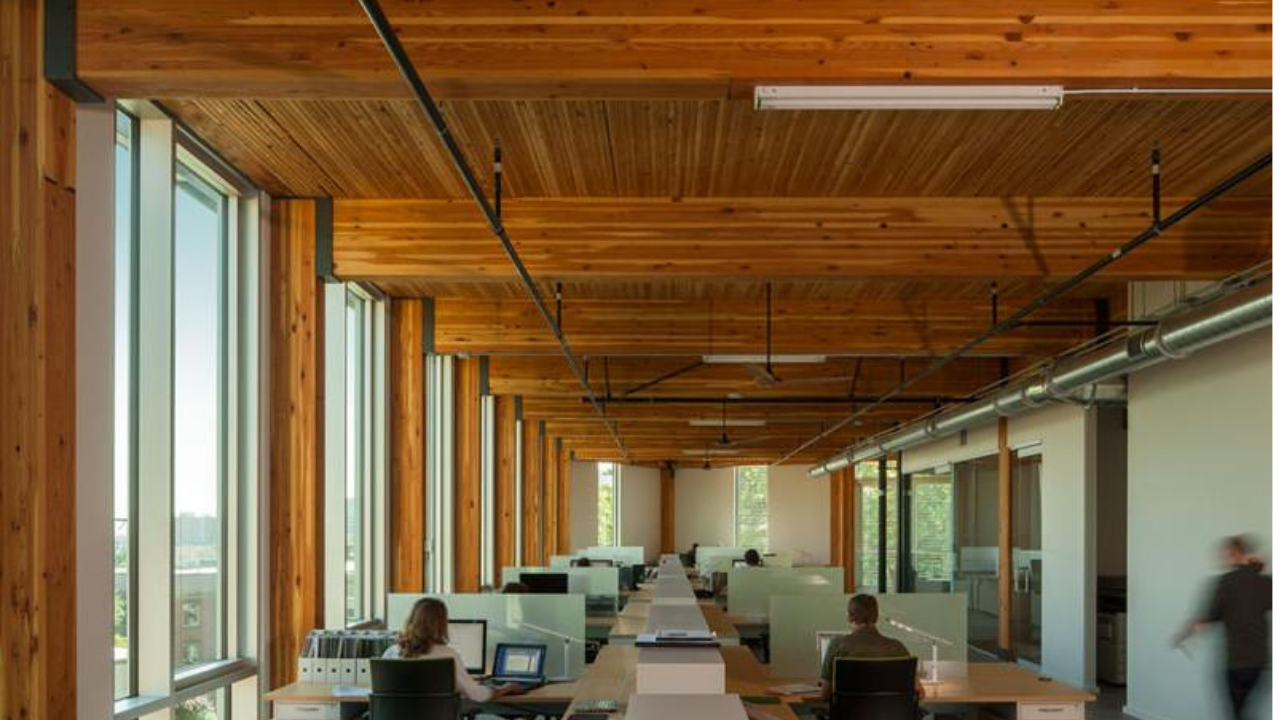
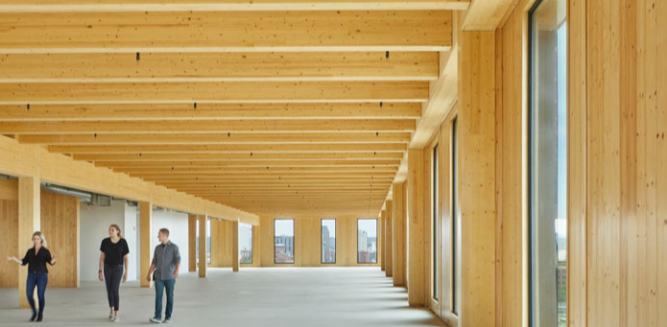
Mass timber supports biophilic design in a direct and authentic way. Instead of applying natural elements as surface treatments, the structure itself becomes part of the experience. Exposed wood ceilings, beams, and columns introduce variation, grain, and warmth that can’t be replicated by synthetic materials.
Research referenced by the WELL Building Standard and other design frameworks suggests that spaces incorporating natural materials can help reduce stress, support focus, and improve overall occupant satisfaction. For owners and developers, this can translate into stronger tenant demand and more durable long-term appeal, but only when biophilic principles are thoughtfully integrated, not treated as an afterthought.
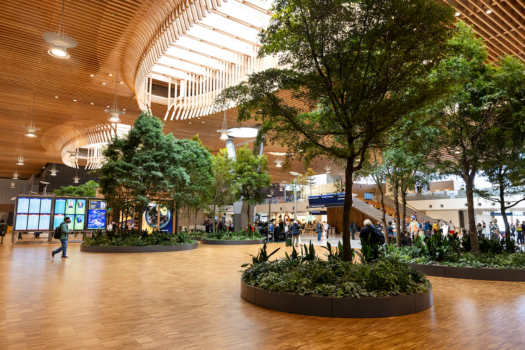
How Biophilic Design Shows Up in Real Projects
In mass timber buildings, biophilic principles often emerge through:
- Exposed structural systems that reduce the need for additional finish layers
- Higher ceilings and open spans that allow daylight to travel deeper into spaces
- Material honesty, where the structure is visible rather than concealed
- Calmer interiors that rely less on visual clutter to create interest
These characteristics tend to create environments that feel more grounded and intentional. The result is spaces people want to spend time in, not just pass through.
Strong Partnerships, Smarter Builds
Mass timber projects require alignment from the start. By collaborating early with our partners at StructureCraft, we’re able to solve design challenges, provide procurement and lead time solutions, and proactively manage shipping and erecting sequence—keeping your project on track from concept through construction.

Learning Through Experience
Mass timber is still an evolving approach in many regions, including Florida, and each project contributes to a growing body of shared knowledge, particularly around detailing, moisture control, and coordination in warm, humid climates. Successful outcomes depend on coordination between structural design, moisture management, detailing, and construction sequencing.
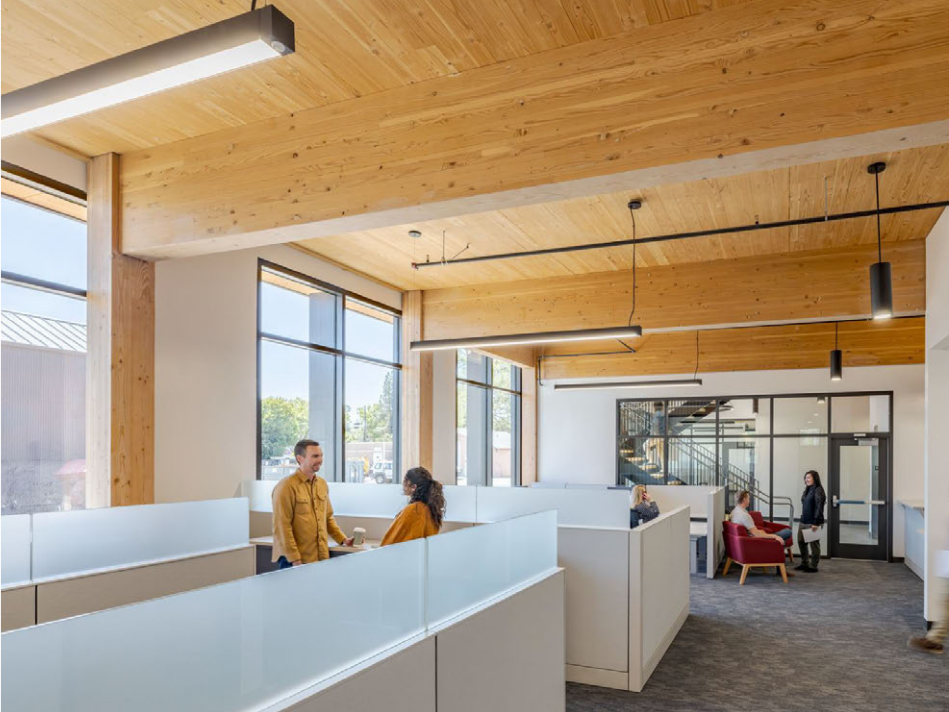
At Gervais Ventures, our understanding of mass timber comes from hands-on exposure rather than theory alone. Our Operations Manager, Nik Gervais, worked on multiple wood-structured projects. Two examples, Nova and Volta, are mass timber buildings that integrate exposed wood within modern office and retail environments.
Those projects reinforce an important lesson: mass timber works best when it’s approached as part of a complete system—one that balances structural performance, constructability, and the human experience of the finished space. Every project adds new insights, and we approach mass timber with the understanding that learning is ongoing.
Where Mass Timber Fits and Where It Doesn’t
Mass timber isn’t the right solution for every project. It’s one option within a broader toolkit of structural systems, and its suitability depends on budget, building type, site conditions, and long-term goals.
In the right context, mass timber can support sustainability objectives while also enabling biophilic design in a way that feels authentic rather than decorative. In other situations, traditional materials may make more sense. The value comes from evaluating these trade-offs early and aligning material choices with both performance requirements and occupant experience.
Looking Forward
Mass timber reflects a broader shift toward buildings that prioritize people as much as performance. By combining engineered strength with natural materials, it offers a path toward spaces that are efficient, resilient, and genuinely enjoyable to occupy.
Gervais Ventures continues to engage with mass timber as part of an ongoing learning process. We work closely with designers, engineers, and owners to understand where it adds the most value and how it can be executed responsibly.
For teams beginning to explore mass timber, early conversations about structure, detailing, and biophilic design can help clarify whether it’s the right fit for a project.